The Champion Development System
Training often and developing on purpose are two different things. The iTUSA methodology builds the second — one system connecting assessment, priorities a coach can act on, and a review cycle that does not stop.
The Effort Is There. The System Often Isn’t
Many ambitious juniors train regularly, compete through the season and give the sport real time. Progress still slows. Not because the effort dropped, but because the work stopped being organised around precise objectives. Sessions accumulate without building on each other. Matches are processed emotionally, so the same errors come back in the next round. And parents, with no structured view of what is actually being worked on, find the investment harder to sustain. This is not a failure of commitment. It is the absence of a system.
Nothing Here Stands on Its Own
The iTUSA Champion Development System closes the loop. The assessment sets the priorities. The priorities become a correction plan. The plan becomes the training week. What happens on court is logged, and those logs feed the reports that reset the objectives at a higher level.
For players in competition, every tournament runs a parallel analysis that comes straight back into training.
A drill on Tuesday traces back to an assessment three weeks earlier and a match last weekend. That is what makes the hours accumulate into something.
Our Players are Built Across Six Dimensions
Elite tennis is not stroke mechanics with a few extras attached. A player can strike the ball well and still lose week after week: the tactical read comes late, the legs go in the third set, the structure disappears at 30-40 on serve. The six dimensions below are all trained and all assessed. None of them is optional.
Technical Development
Assessed against the full criteria framework. Corrections are prioritised by what the limitation costs the player in a match, then documented and tracked until the change holds under pressure.
Tactical Intelligence
Match analysis feeds training directly. Recurring decision errors are named, drilled against, and checked again in the next competition block.
Mental Performance
Every player builds a competition framework: a routine between points, a response when the score turns, a way of processing the match afterwards. Scheduled and reviewed like every other pillar.
Physical Performance
One hour or more of structured preparation on every training day: acceleration, deceleration, lateral movement, structural work under load, and recovery planned as deliberately as the effort. Designed by a specialist working exclusively with professional players.
Competition
Every tournament produces data. Players go in with objectives they can name. They come out with a post-match report that shapes the next training cycle.
Recovery
Two structured recovery days per week, planned with the same rigour as the hardest session. Recovery is a performance variable, not a reward.
The system does not run itself. The Head Coach sets the development direction and validates every correction plan before it reaches a player. Development coaches turn that plan into daily on-court work — running the drills, watching how the execution actually looks, sending what they see back into the player's file. The performance specialists work from the same framework and inside the same review cycle.
Remote Elite Junior
Remote Elite Junior runs the full six-week development cycle: assessment, correction plan, training program, feedback, reports and Head Coach review; wherever the player already trains. It is not a self-guided online program. The Head Coach defines the direction, approves every plan and reviews every cycle. The local coach delivers the sessions on court. The System keeps both working from the same file.
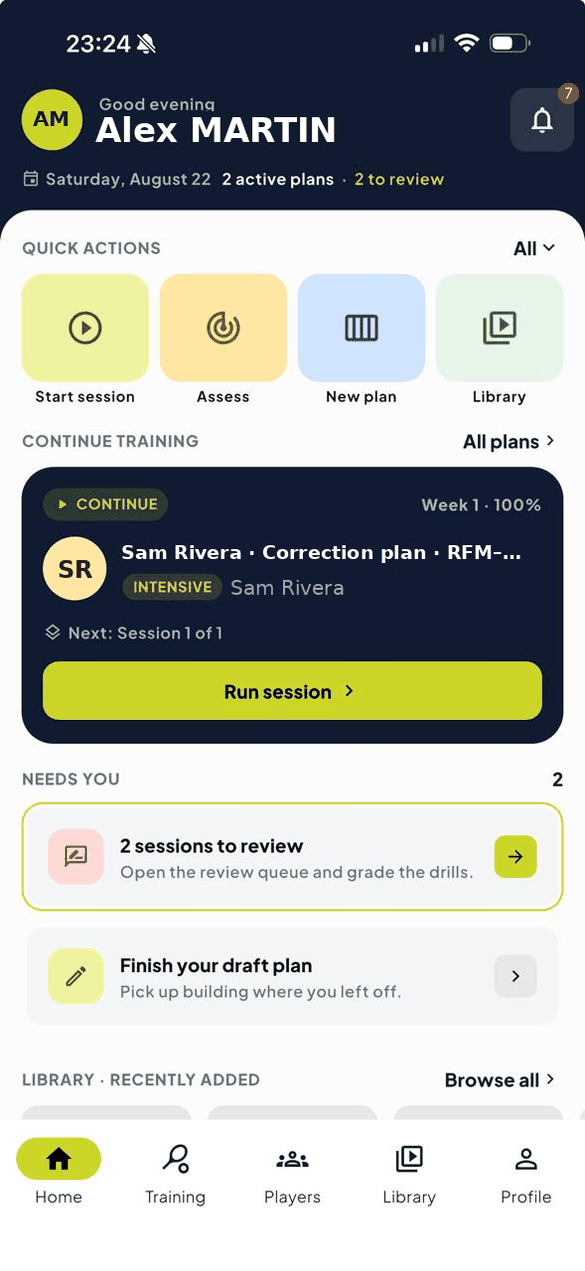
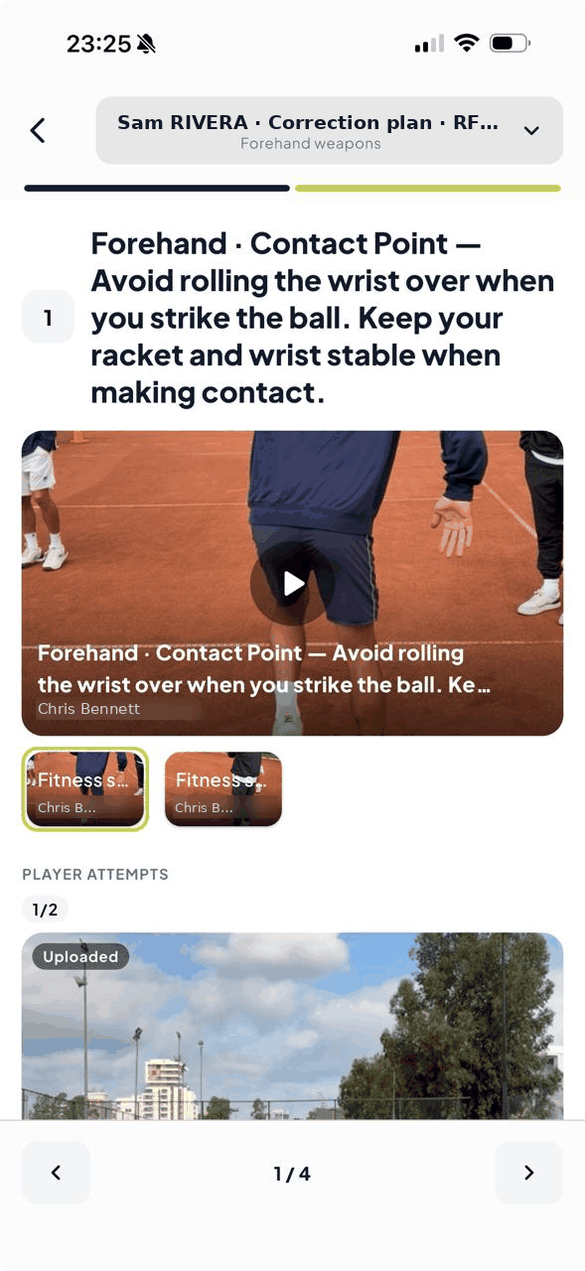
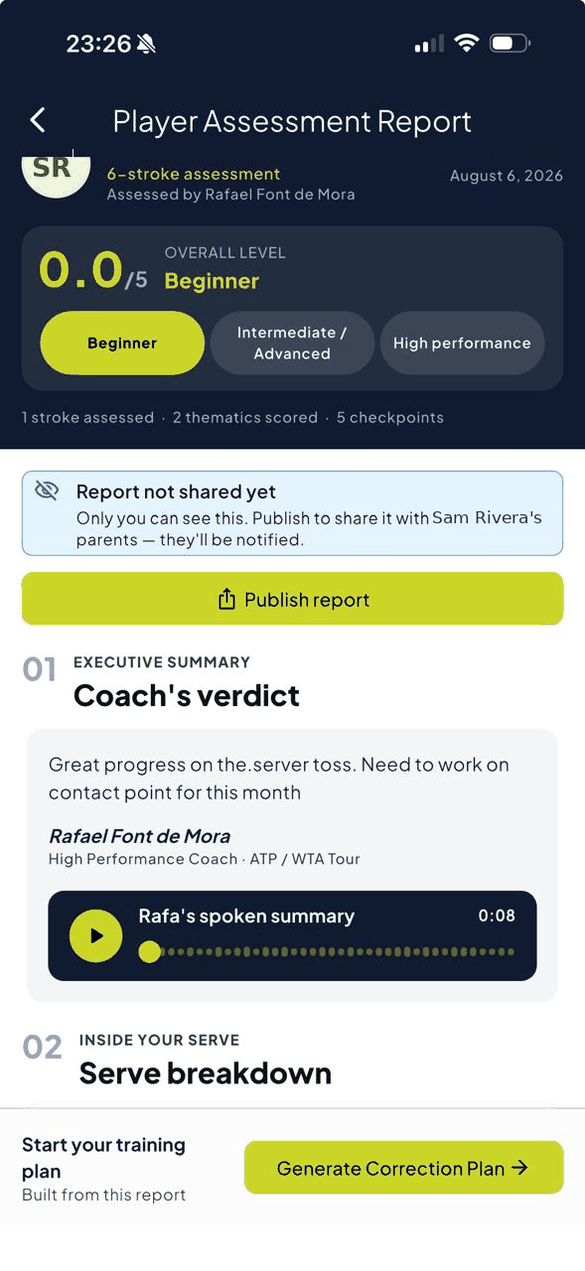
Priorities come from the assessment. The plan follows the priorities. The work is executed and logged on court. The review reads what was logged. The next cycle starts from what the review found.
Player
Training program, session objectives, correction priorities, and a progress view that shows priorities.
Coach
Session logging, correction delivery, execution notes, feedback into the player's file.
Parent
Progress reports, current objectives, Head Coach updates: visibility without interference.
Head Coach
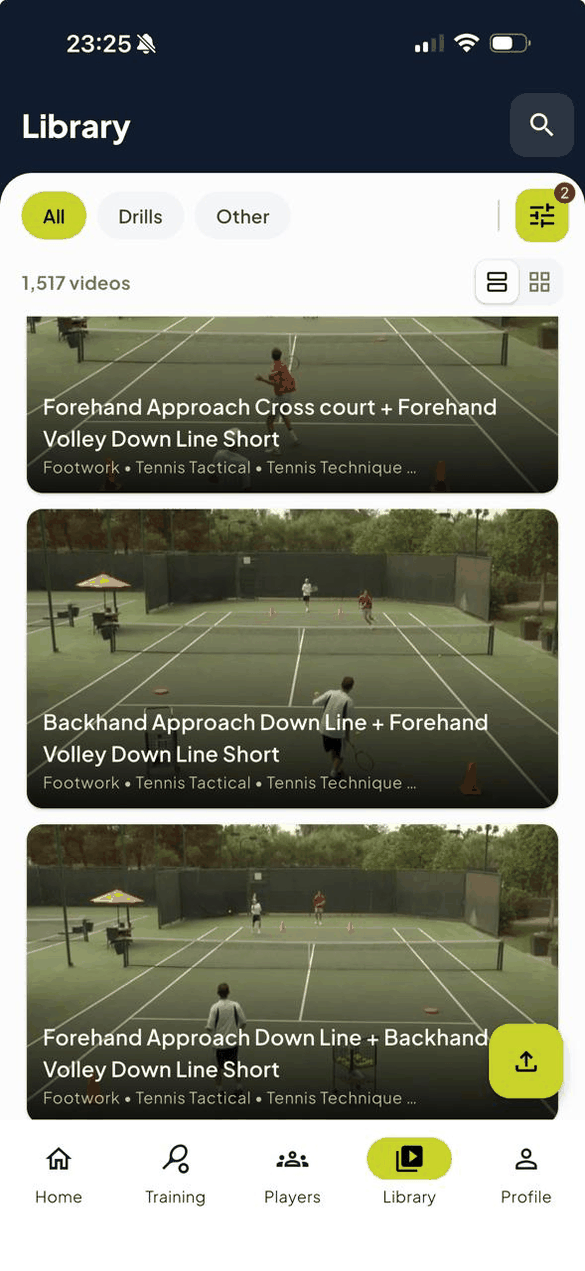
Full supervision, plan validation, report review, development décisions and realtime interaction
The Method, Not the Promise
Thirty years of coaching produced the results. What made them repeatable is the system underneath — and that system is the same whether a player trains here, with a certified coach, or from home.
Built From Practice, Not Theory
The system was not designed in a room. It was extracted from thirty years of building juniors into professionals, then corrected season after season by what actually held up on court.
Every Plan Head Coach Approved
No correction plan reaches a player before the Head Coach has read and approved it. The standard does not change with the format — academy, certified coach or remote.
One File, Every Role
Coach, physical trainer, parent and Head Coach work from the same player file. Nothing is re-explained between sessions, and nothing is lost between them.
“What can take one coach months to fix in a tennis players game can take you less than 30 minutes.”
Jessica Monroy — Mother of iTUSA Student Maddie Monroy
“We visit him periodically and take home a personalized training plan based on a step-by-step plan so he can reach his full potential.”
Gonzalo Corrales — NCAA Champion, iTUSA client since 1994
“What set Rafael apart was not simply that his players improved, but the degree to which they improved.”
Pablo Giacopelli — Former WTA Tour coach, twenty-two years alongside Rafael
“I have learned tennis basically from Rafa, and my daughter has grown tremendously from a seven-year-old kid to recently graduating from Harvard as the number one player.”
Father of Maxi Duncan — Harvard number one player, first undefeated Ivy League season in 25 years
FAQ
Without it, a coach works on the visible problem rather than the one causing it. The assessment covers technique, tactical patterns, physical profile and competition behaviour, and produces a ranked list of priorities for this player. It also sets a baseline: three months later, progress is measured against something specific instead of a general impression. No plan is written at iTUSA before the Head Coach validates the assessment.
A training program tells a player what to do this week. The system decides what the week should contain, checks whether it worked and adjusts the next one. The program is one part of a cycle that also includes the assessment, the correction plan, the execution logs, the reports and the revised objectives. Taken out of that cycle, even a well-built program drifts within a month.
The methodology, the assessment framework and the Head Coach's supervision are identical. What differs is who delivers the session: your local coach rather than an iTUSA development coach. Remote works when the local coach engages with the plan and the player uploads the evidence requested. Where those two conditions hold, development follows the same path. Where they do not, we say so at the review rather than let the cycle drift.
Parents have their own view: the current objectives, the progress reports and the Head Coach's summary at the end of each cycle. They do not receive a live feed of every session note — that turns dinner into a debrief. The intention is that a parent can see whether the work is moving, and raise the right question at the right moment, without becoming a second coach on the drive home.
Both are planned, not improvised. Physical work takes an hour or more of every training day — acceleration, deceleration, lateral movement and structural work, adjusted to the player's growth stage and competition calendar, because a forehand that breaks down in the third set is usually a stability or endurance problem before it is a technical one. Mental work follows the same discipline: each player builds a competition framework — what happens between points, what the response is when the score turns, how the match is processed afterwards — trained under deliberate pressure and reviewed after tournaments. Both are designed by specialists working exclusively with professional players, and both sit inside the same review cycle as everything else.
Formally at the end of every cycle, with a report stating what moved, what did not, and what the next priorities are. Between reviews, corrections are tracked continuously, and a priority can be closed early once the change holds in matches. Objectives are not left standing for a season out of habit.
Yes. Local coaches work inside Remote Elite Junior on their player's plan. Coaches who want to run the methodology themselves go through the iTUSA Coaches Certification. In both cases the coach keeps the relationship with the player. What changes is the framework behind the decisions: the assessment protocol, the correction priorities and the review discipline.
iTUSA Coaches Certification